
Gas Appliance Certified

Dealing with an electric stove top that refuses to heat up can disrupt your entire meal routine. The cooktop on this Samsung electric range had a burner that completely stopped…
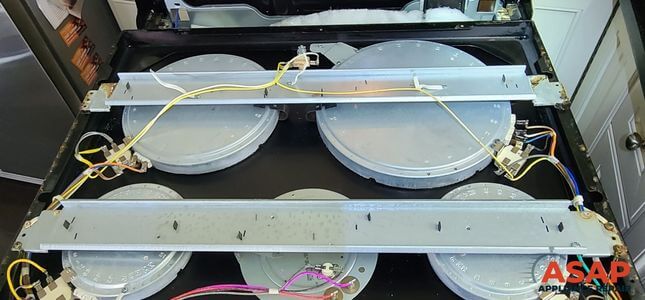
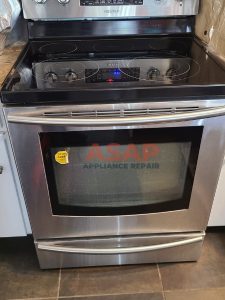
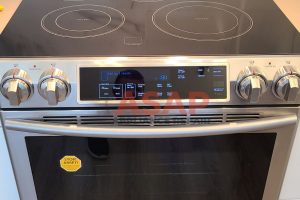
Dealing with an electric stove top that refuses to heat up can disrupt your entire meal routine. The cooktop on this Samsung electric range had a burner that completely stopped responding, making it impossible to cook properly. Our technician dismantled the main glass surface to inspect the internal components directly. After testing the wiring and connections, the issue was traced to a burned-out heating element. We carefully disconnected the old, faulty element from the support brackets, wired in an exact OEM replacement, and resecured the entire cooktop assembly. Everything is back in place, and all burners are cycling at the correct temperatures again.
What the customer reported
The cooktop on this Samsung electric range in Vancouver had a burner that had completely stopped responding. It wasn’t heating slowly or unevenly, it just wasn’t heating at all, and that made it hard to cook a proper meal. When one burner on a range is out, most households end up shuffling pots around and working with what’s left, which gets old fast.
What the diagnosis found
Our technician took apart the main glass surface to get a direct look at the internal components. Instead of assuming the cause, the technician tested the wiring and the connections first. That step matters, because a burner that won’t heat can have several possible causes, including the element itself, the wiring or the connections. In this case, the testing traced the problem to a burned-out heating element.
The part and the repair
We carefully disconnected the old, faulty element from the support brackets, wired in an exact OEM replacement, and resecured the entire cooktop assembly. Using an OEM element means the replacement is made to match the original specification for that range, which helps it fit and heat the way the manufacturer intended. Once everything was back in place, all the burners were cycling at the correct temperatures again, and the customer had a fully working cooktop.
How to avoid this fault
Keep your cookware flat against the surface and wipe up boil-overs promptly so spills don’t bake onto the cooktop. If a burner starts to heat slowly or unevenly, get it checked before it stops altogether.
Why it matters
A radiant element on an electric range is essentially a resistance coil. Electricity passes through it, the coil heats up, and that heat comes up through the glass to your pan. Over years of use, a coil can wear out and break, and once it’s open, no current can flow, so the burner stays cold no matter where you set the dial. That’s why testing the wiring and connections before replacing anything is worth the extra few minutes. The details differ between models, so the right replacement depends on the specific range, and matching the original specification is the safest way to do it. If a burner on your own range has gone quiet, a proper inspection will tell you whether it’s the element or something else.

 Fridge Repair
 Dishwasher
 Washer Repair
 Dryer
Dryer Oven Repair
 Stove Repair