

Gas Appliance Certified

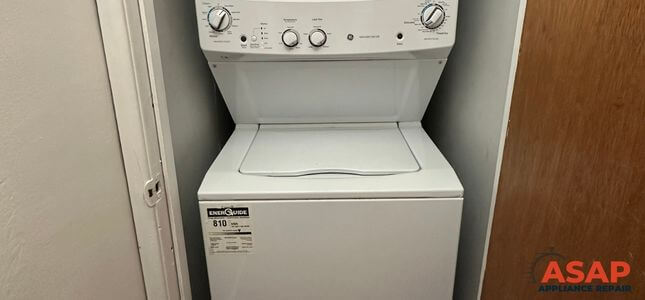
It’s incredibly frustrating to pull a load of laundry out of the machine only to find your clothes are still dripping wet. That’s exactly what was happening with this GE…
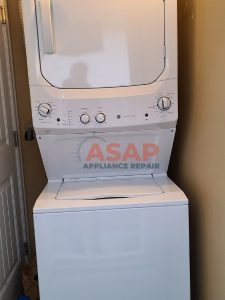
It’s incredibly frustrating to pull a load of laundry out of the machine only to find your clothes are still dripping wet. That’s exactly what was happening with this GE stacked laundry center before we stepped in to take a look. When a top-load washer refuses to spin out the water, the culprit is usually a broken lid switch, a worn-out drive belt, or a failing shift actuator. For this particular unit, we diagnosed the mechanical failure keeping the basket locked in place, replaced the faulty component, and ran a test cycle to ensure the high-speed spin was fully restored.
What the customer reported
The customer’s GE stacked laundry centre in Vancouver was running its wash cycle, but the clothes came out still dripping wet. The top-load washer, the kind with the lid on top, was refusing to spin out the water, which left a drum of soaked laundry and a day’s routine thrown off.
What the diagnosis found
When a top-load washer won’t spin, the usual suspects are a broken lid switch, a worn drive belt or a failing shift actuator. Each one stops the basket in its own way. A bad lid switch tells the machine the lid is open, so it won’t spin. A worn belt can’t pass power from the motor to the basket. On many models the shift actuator moves the mechanism between agitate and spin, so when it fails the basket can stay locked in place.
For this particular unit, we diagnosed the mechanical failure that was keeping the basket locked in place.
The part and the repair
We replaced the faulty component. We haven’t listed a part number here, because parts differ between models and we only want to state what we can stand behind. After the replacement we ran a test cycle to make sure the high-speed spin was fully restored.
How to avoid this fault
Spread the laundry evenly around the basket before you close the lid, since heavy, lopsided loads put extra strain on the belt and drive parts. Avoid cramming in more than the manual recommends.
Why it matters
The spin cycle is where a washer removes most of the water from a load. When it fails, the whole cycle is wasted, and wet clothes left sitting in the drum can start to smell if you don’t deal with them quickly.
Spin problems rarely fix themselves. A part that’s slipping or failing can leave the machine stuck partway through a cycle, so it’s worth having it checked sooner. The exact parts involved vary by brand and model, which is why a proper diagnosis comes before any replacement. ASAP Appliance Repair is based in Surrey and repairs residential washers across Vancouver and the rest of Metro Vancouver.
 Fridge Repair
 Dishwasher
 Washer Repair
 Dryer
Dryer Oven Repair
 Stove Repair