


Fridge Making a Loud Noise? What Each Sound Means
In this article
Sounds that are completely normal
Before troubleshooting, here are the sounds every fridge makes as part of normal operation:
- Low hum. The compressor running. A constant, moderate hum is normal. Most fridges hum for several minutes, stop, then restart every 20 to 30 minutes.
- Cracking or popping. Plastic parts expanding and contracting with temperature changes. Happens most after a door is opened and warm air rushes in.
- Ice falling into the bin. A loud thud every few hours from the ice maker is normal. It is just ice dropping.
- Water rushing sound. The water inlet valve filling the ice maker. A brief whooshing sound every few hours.
- Gurgling or bubbling. Refrigerant circulating through the coils after a cooling cycle. Completely normal.
Did you know?
Most new fridges are noticeably louder than older models. Modern compressors cycle more frequently and more audibly. If your new fridge sounds louder than you expected, check the manufacturer specs. Some models specify their noise level (in dBA) in the product sheet.
Clicking sounds
Compressor starting and stopping
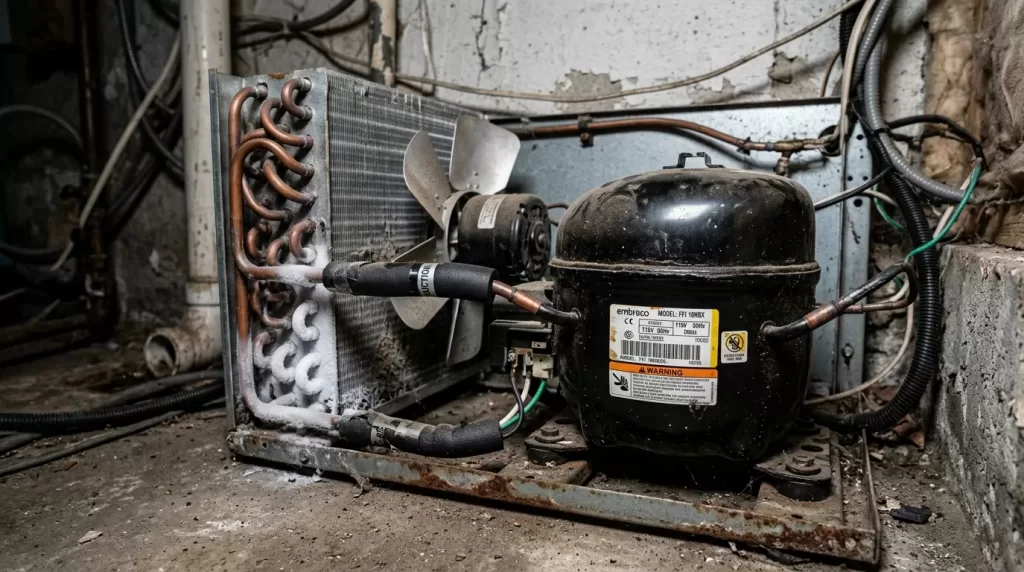
A click every 20 to 30 minutes as the compressor turns on or off is normal. If the clicking is rapid and the fridge is not getting cold, the compressor may be struggling to start. This is called hard starting and is a sign the start relay (a small component on the compressor) may have failed.
The start relay test: unplug the fridge, pull out the relay (it clips onto the side of the compressor at the back), and shake it near your ear. A rattling sound inside means the relay has failed. Replacement is inexpensive ($30 to $80 for the part) and is a job many people do themselves.
Ice maker cycling
The ice maker goes through a cycle of filling, freezing, and harvesting ice. The harvest cycle involves a brief run of the ice maker motor and a clicking as the ice is pushed off the mold. This is completely normal. It usually happens every 90 to 120 minutes.
Buzzing or humming sounds
Normal compressor hum
A steady, moderate hum from the back or bottom of the fridge is the compressor running. If it has always sounded this way, it is normal.
Water inlet valve buzzing
A brief buzzing sound (5 to 20 seconds) every few hours is the water inlet valve opening to fill the ice maker. This is normal.
Loud buzzing that did not exist before
A new, loud buzzing that was not there before can mean:
- Condenser fan blade hitting something. The condenser fan is at the back or bottom of the fridge. If a piece of debris or a loose wire is in contact with the blade, you will hear a buzzing or whirring when the fan runs. Unplug the fridge, remove the back panel, and visually check the fan area.
- Evaporator fan blade iced over. If ice builds up around the evaporator fan (inside the freezer), the blade will buzz or scrape as it tries to turn. A forced defrost cycle can clear this.
- Worn fan motor bearing. A fan motor whose bearing is wearing out will produce an increasingly loud hum or buzz over weeks or months. Repair cost: $120 to $250 for the fan motor.
People often ask: Why is my fridge making a loud buzzing sound?
The most common cause of a new loud buzzing on a fridge is a condenser or evaporator fan blade hitting something, or ice buildup around the evaporator fan. Check the fan area at the back or bottom of the fridge, and run a defrost cycle if the freezer fan is the source.
Rattling sounds
Rattling is almost always something loose. The first place to check is external: items on top of the fridge, loose shelving inside, or the drip pan underneath.
- Drip pan rattling. The condensate drip pan underneath the fridge can vibrate if it is not seated correctly. Slide the fridge out slightly, locate the pan (usually at the back bottom), and confirm it is properly in place.
- Loose compressor mounting. The compressor sits on rubber grommets to absorb vibration. If a grommet fails, the compressor will rattle on its mount. This is a repair job.
- Pipes or lines vibrating against a panel. Refrigerant lines that run along a panel can vibrate at certain compressor speeds. A technician can add foam padding to stop this.
Knocking or banging sounds
A hard thud every few hours is usually just ice dropping in the ice maker bin. That is normal.
A repeated knocking or banging that is not the ice maker is more concerning. Possible causes:
- Loose water line. The water supply line to the ice maker can knock against the back of the fridge as the inlet valve opens and closes under pressure.
- Compressor hard starting. A failing start relay causes the compressor to attempt to start, fail, and retry. Each failed attempt sounds like a brief knock or thud. The fridge will also not be maintaining temperature properly in this case.
Squealing or grinding sounds
A squealing, whining, or grinding sound from inside the fridge or freezer usually points to a fan motor bearing that is failing.
There are typically two fans in a fridge: the evaporator fan (inside the freezer compartment, behind the back wall) and the condenser fan (at the back or bottom of the unit). Either can produce a squealing sound when the bearing wears out.
This is a repair to address promptly. A fan motor that seizes completely will cause the fridge to stop maintaining temperature, leading to food loss. Fridge repair for a fan motor typically runs $120 to $250* in Metro Vancouver.
Pro tip
If the sound only happens when the freezer door is open and stops when it closes, that is the evaporator fan. If the sound continues whether the door is open or closed and comes from the back or bottom of the unit, that is the condenser fan.
Gurgling or dripping sounds
Gurgling, bubbling, or a brief dripping sound after a cooling cycle is the refrigerant moving through the expansion valve and evaporator coils. This is normal and is more audible on some models than others.
If you hear a sustained dripping sound (more than a few seconds), water may be accumulating somewhere it should not. Check:
- The drain pan under the fridge for overflow.
- The defrost drain in the freezer for a blockage (a blocked drain causes water to pool and drip inside the freezer).
Frequently asked questions
Is it normal for a fridge to make noise?
Yes. Fridges produce a range of normal sounds: compressor hum, ice maker cycling, refrigerant gurgling, and thermal popping. A steady moderate hum and occasional clicks are expected. A new sound that appeared suddenly, or a familiar sound that has gotten louder, is worth investigating.
Why does my fridge make a loud noise at night?
Houses are quieter at night, making the fridge more noticeable. If the sound is the compressor or ice maker cycling, that is normal. If you are hearing a new squealing, grinding, or buzzing that was not there before, check the fan motors.
My fridge is making a clicking sound but not cooling. What is wrong?
Rapid clicking with no cooling is a classic sign of a failed start relay. The compressor is trying to start, failing, and retrying. The start relay is inexpensive and replaceable. If replacing it does not fix the issue, the compressor itself may have failed.
How do I stop my fridge from rattling?
Check items on top of the fridge, shelving and drawers inside, and the drip pan underneath. If those are all secure and the rattle continues, check whether the fridge is level. An unlevel fridge will vibrate on its feet.
If the noise is getting worse or your fridge is not maintaining temperature, book a diagnostic visit with ASAP Appliance Repair to come and take a look. We cover all of Metro Vancouver and offer same-day service.
Related repair services: Need a technician? We can help with Fridge repair in Vancouver or appliance repair across Metro Vancouver.
 Fridge Repair
 Dishwasher
 Washer Repair
 Dryer
Dryer Oven Repair
 Stove Repair