A Homeowner’s Guide to Common Blomberg Dryer Error Codes in 2026
In this guide
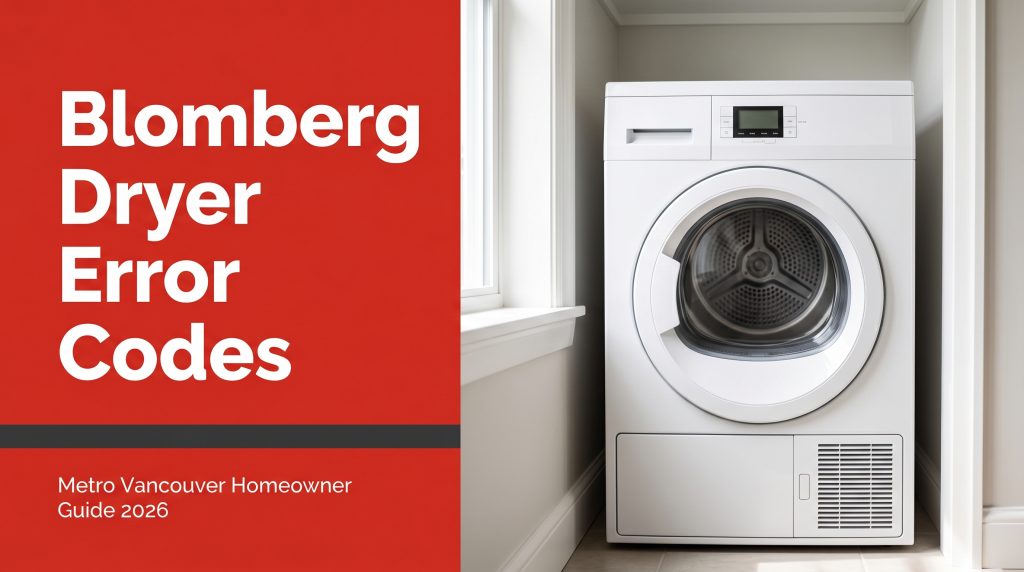
When the panel on your compact European dryer flashes a letter and a number instead of finishing the cycle, the unit is telling you exactly what stopped it. Common Blomberg dryer error codes like E03, E08, E09, E13, and E14 each point to a different problem, and most of them have a simple homeowner check before any tech needs to come out. This guide walks you through what each code means, what to look at first, and when the issue is worth a call to our Blomberg appliance repair team. If you would rather skip the troubleshooting, you can book a service appointment and we will diagnose it in one visit.
Most Blomberg dryers sold in Metro Vancouver are ventless heat-pump or condenser units. That changes the troubleshooting picture in two important ways. There is no rigid vent line to clear, so airflow problems hide inside the unit. And there is a condensate system, which means water has to drain somewhere. Both of those quirks show up in the codes below, so knowing your model type before you start saves time.
Why Blomberg dryers use these codes
Blomberg is a European brand engineered for compact apartments and stacked laundry closets, and the control board stops the cycle the moment a sensor reads outside spec. That sounds aggressive, but it protects the heating system, the drum motor, and the condensate pump from running into trouble. A North American dryer might try to finish a cycle with weak airflow and just leave clothes damp. A Blomberg will stop, throw a code, and wait for you to fix the underlying issue.
Codes are grouped by what the dryer was doing when the fault triggered. Sensor faults appear early in the cycle. Drain or airflow faults appear once water or heat is involved. Door and motor faults appear right at startup. Knowing the rough family of the code tells you whether to look at the front of the dryer, the back, or inside the drum.
Did you know?
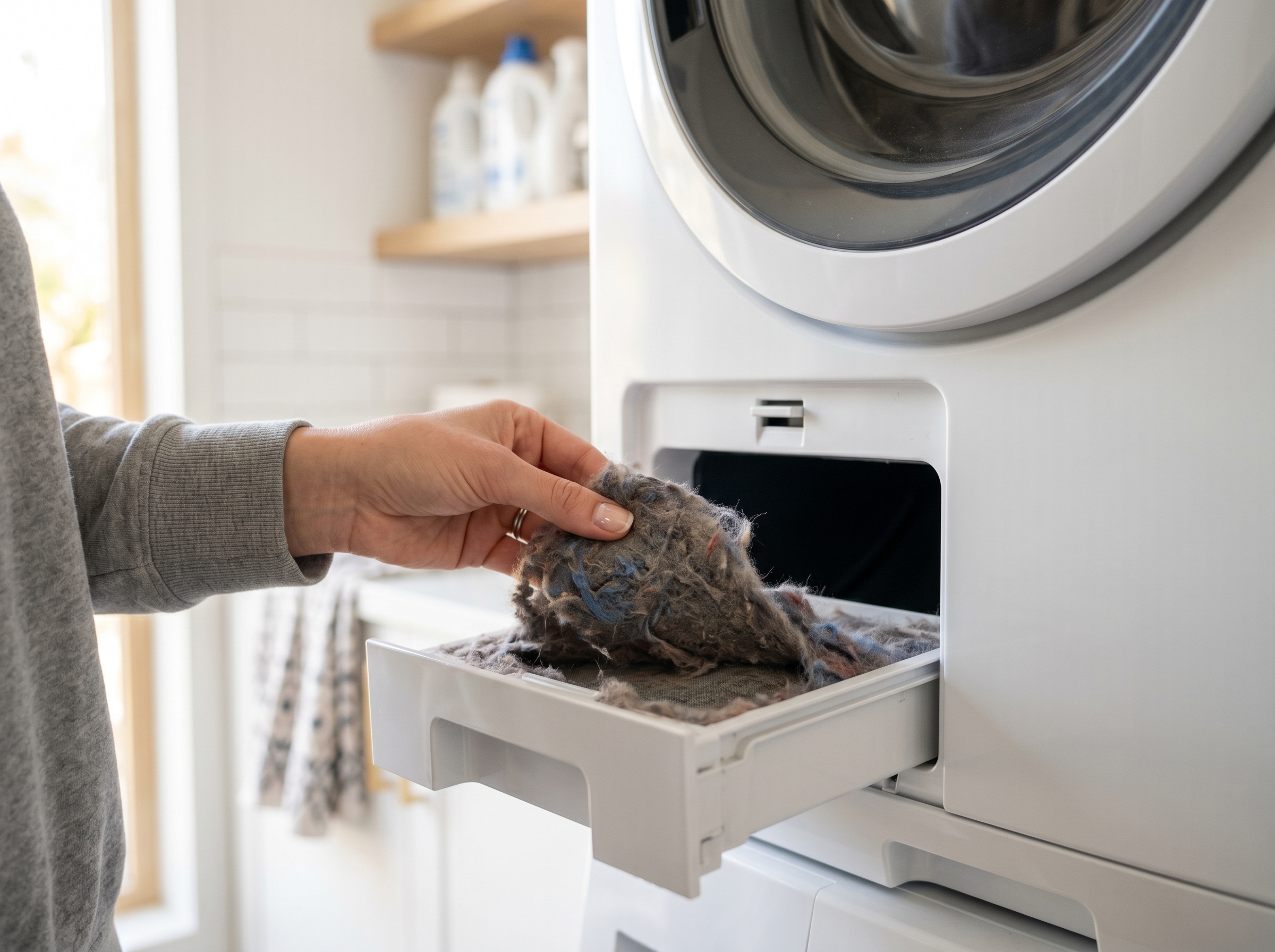
A ventless heat-pump dryer like a Blomberg circulates the same air through a heat exchanger, dehumidifying clothes instead of blowing the moisture outside. That means lint accumulates in two places, the door filter and a secondary condenser filter behind the kick panel. If you clean only the door filter, the second one clogs in about three months and starts triggering airflow codes.
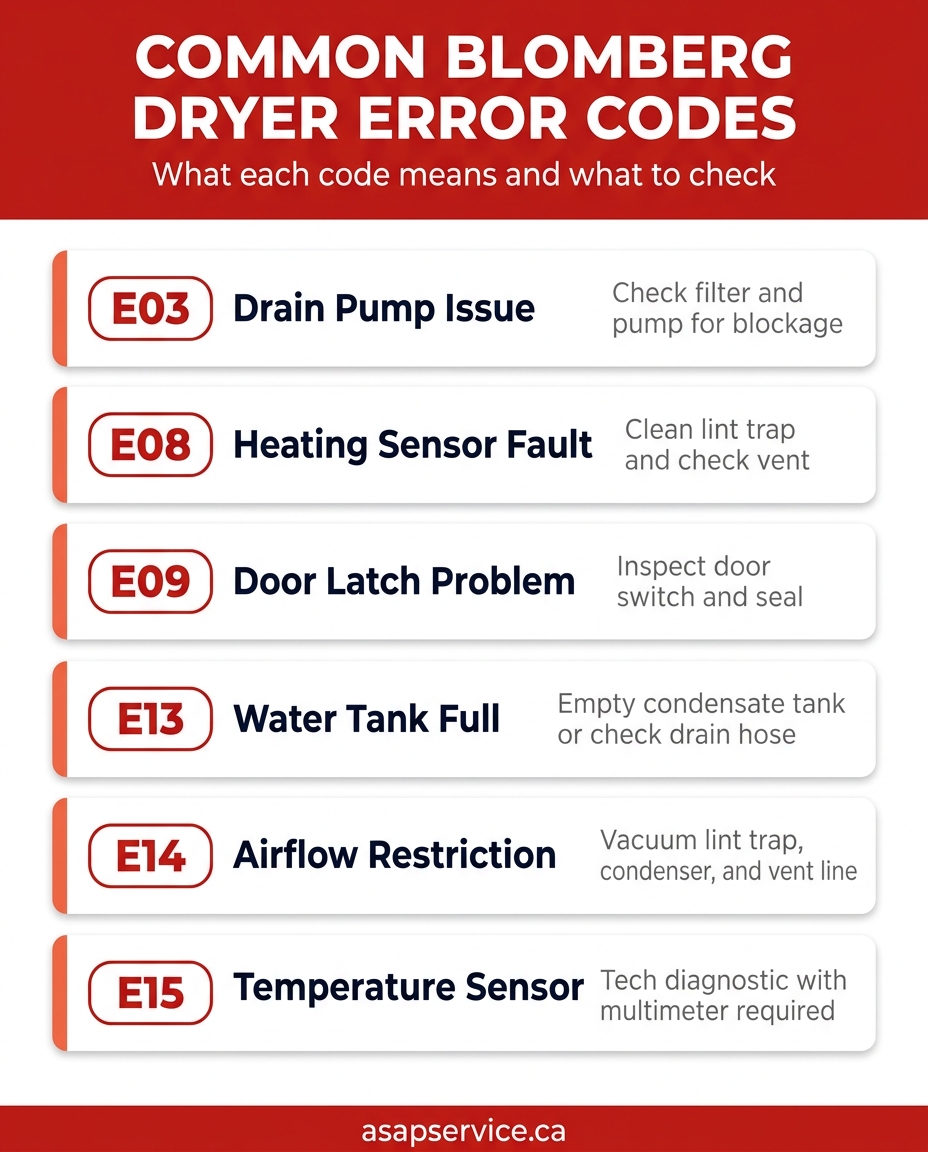
The common Blomberg dryer error codes and what each one means
Blomberg uses the same family of codes across its DV, DHP, DV17, and DPS series dryers. Some older units use slightly different prefixes, but the meanings line up. The list below covers the codes that come up most often in service calls across Metro Vancouver.
E03 – Drain pump issue
The condensate pump is not moving water out of the reservoir. On most Blomberg models the water either pumps into a removable tank at the top of the unit or into a household drain hose. E03 means the float switch is calling for the pump to run, but the pump is not registering flow. The fix is almost always a clogged drain filter, a kinked drain hose, or a tank that has not been emptied. A failed pump itself is rare and usually a tech replacement.
E08 – Heating sensor fault
The temperature sensor on the heating circuit is reading outside its expected range. Two things commonly cause this. One, the lint trap or condenser filter is clogged enough that air cannot move heat through the drum, so the sensor sees an overheat spike. Two, the sensor itself or the thermistor wiring has failed. Always start by checking and cleaning both filters before assuming the sensor is bad.
E09 – Door latch or door switch problem
The control board is not getting a closed-door signal. Either the door is not fully latched, the latch hook has worn or bent, or the door switch micro contact has failed. Open the door, inspect the latch tongue for play, and close the door firmly. If the door is closed and the code persists, the switch or the wiring harness needs service.
E13 – Water tank full or drain blockage
Different from E03. E13 specifically means the unit thinks the condensate reservoir is full. If you use the tank, empty it and reinsert it. If you have plumbed the unit to a household drain, check that the drain hose is not pinched behind the dryer and that the hose end is below the level shown in the install manual. A blocked or kinked hose causes the same code.
E14 – Airflow restriction
The most common code we see in service calls. The condenser airflow is restricted enough that the unit cannot maintain proper temperature differential. On heat-pump models, vacuum out the condenser cartridge behind the kick panel. On condenser models, rinse the condenser plate in the sink, dry it fully, and reinstall. Lint behind the door filter, on the door gasket, and along the drum airflow opening also contributes.
E15 – Temperature sensor diagnostic
The thermistor or temperature probe reading is logically inconsistent. Resistance is out of range or the reading has stopped changing the way the control board expects. This one usually needs a tech with a multimeter to verify the sensor resistance against the model service sheet. It is not a DIY repair.
Pro tip
Before you call for service on any code, run a power cycle. Unplug the dryer for 60 seconds, plug it back in, and try a short cycle. A surprising number of codes are one-time sensor blips that clear with a hard reset. If the code returns immediately or on the next cycle, the underlying fault is real and worth a service call.
First checks you can do safely
Before any tech tool comes out, there are five things any homeowner can check in 15 minutes. These solve roughly half the service calls we get for Blomberg codes, and they cost nothing.
- Empty the condensate tank. Lift it out, pour the water into the sink, and slide it back in. If your unit drains to a hose instead, pull the dryer out an inch and check that the hose is not pinched between the unit and the wall.
- Clean the door lint filter. Pull it out, brush off the lint, rinse it under warm water if it feels waxy, dry it fully, and reinstall. Wax buildup from dryer sheets reduces airflow even when the filter looks clean.
- Vacuum the secondary condenser filter. On heat-pump models, open the kick panel at the bottom front, slide out the cartridge, and vacuum the foam screen. On condenser models, rinse the plate in the sink and let it dry overnight before reinstalling.
- Check the door latch. Open and close the door firmly. Listen for the click. Wiggle the latch hook with the door open to feel for play. A loose or bent latch hook is a common E09 cause.
- Power cycle the unit. Unplug for 60 seconds, plug back in, and run a short cycle. Many codes are transient sensor blips that clear with a hard reset.
When airflow is the real cause
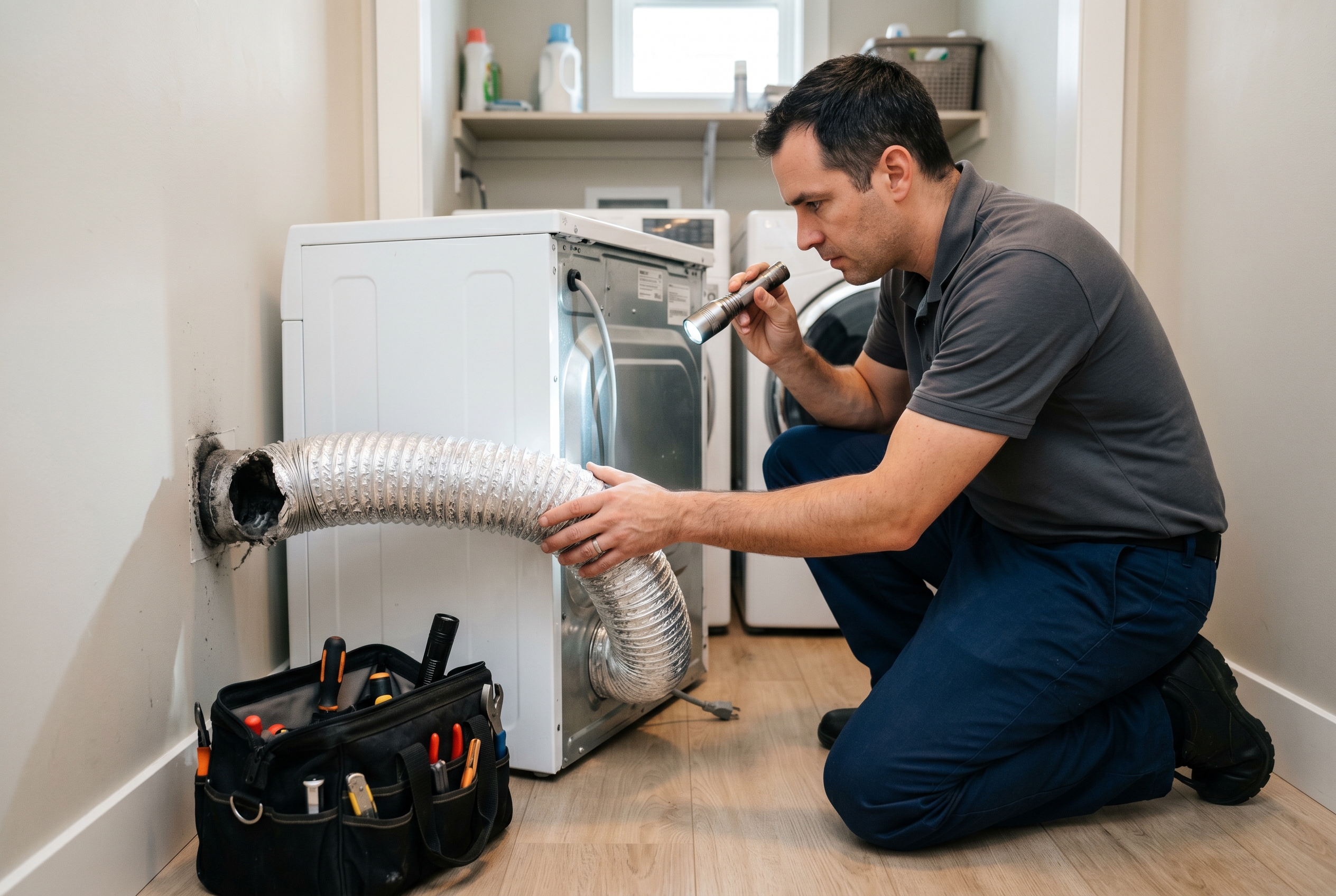
If you have a heat-pump or condenser Blomberg, almost every code that looks like a heating fault is really an airflow fault in disguise. The unit cannot transfer heat efficiently, so the sensor sees out-of-range temperatures and stops the cycle. Cleaning the condenser cartridge solves more codes than any other single action.
The condenser is the metal block behind the kick panel that catches lint, dust, and pet hair. On heat-pump units it is paired with a foam pre-filter that you can pull out, brush off, and rinse. On older condenser units the metal plate itself slides out and gets rinsed at the sink. Manufacturer service literature for Blomberg dryers recommends cleaning the secondary filter every three months in normal use, every month if anyone in the home has long hair or you dry pet bedding.
If you have already cleaned both filters and the airflow code keeps coming back, the next two suspects are the blower fan or the air sensor itself. Both need a multimeter check and the right replacement part. That is when a service call makes sense. Our dryer repair team stocks Blomberg parts on the truck for most Metro Vancouver service calls, so the diagnosis and repair often happen in one visit.
Save your money
Almost every Blomberg dryer service call we attend in Burnaby and Surrey includes condenser filter cleaning. If the dryer is still under warranty, do not let a tech bill you for that on a separate call. Run a cleaning cycle every three months and a full filter vacuum every six months. That alone prevents the most expensive sensor replacements down the road.
Repair, service call, or replace
Most Blomberg codes fall into one of three buckets. The first is the homeowner-fixable group, which covers E03, E13, and most E14 events. Pull, clean, reseat, run a short cycle. Done. The second is the service-call group, where a part has actually failed and a tech with a meter and replacement components solves it in one visit. The third is the replacement consideration group, where the unit is old enough that the failed part costs more than half the unit value.
Where the line falls depends on three things. Age of the unit, the specific component that failed, and what comparable parts cost in 2026. A heat-pump compressor failure on an eight-year-old Blomberg is a replacement conversation. A door switch on a three-year-old unit is a 30-minute repair. The middle ground is where most homeowners benefit from a real diagnosis before committing to either path.
People often ask: do Blomberg dryers reset themselves?
Some codes clear automatically once the underlying condition resolves. E13 clears when you empty the tank. E09 clears when the door is firmly latched. Sensor faults like E08 and E15 usually need a manual reset. Unplug the unit for 60 seconds, plug back in, and try a short cycle. If the code persists, the fault is real and worth a service call.
What Blomberg dryer repairs cost in Metro Vancouver
Cost is the part most homeowners want to know before they pick up the phone. The numbers below are what a qualified independent appliance shop charges in Metro Vancouver in 2026. Authorized service from Blomberg directly sometimes runs higher, sometimes runs lower with warranty coverage. Always get the quote in writing before any work begins.
| Fault type | Parts cost | Total with labour |
|---|---|---|
| Service call, diagnosis only | n/a | $120 to $160 |
| Door switch or latch replacement | $30 to $80 | $180 to $280 |
| Drain pump replacement | $80 to $160 | $240 to $380 |
| Thermistor or temperature sensor | $40 to $110 | $200 to $320 |
| Blower fan or motor | $180 to $360 | $380 to $620 |
| Heat-pump compressor | $600 to $1,100 | $900 to $1,500 |
Download the Blomberg dryer error code reference (PDF)
A one-page printable cheat sheet covering the six most common codes, the first checks for each, and when to call a tech. Stick it inside the laundry closet door.
Safety notice. Always disconnect power at the wall outlet or breaker before opening any panel on your dryer. Some Blomberg repairs involve sealed heat-pump refrigerant systems that legally require a licensed refrigeration technician. Gas-powered models, where installed, require a TSSA-certified gas technician for any work involving the gas line. ASAP Appliance Repair is not liable for damage, injury, or warranty voiding from DIY repairs. When in doubt, schedule a service call.
Sources and references
- Technical Standards and Safety Authority of Ontario, TSSA gas appliance safety guidance (applicable to gas dryer install)
- Natural Resources Canada, ENERGY STAR Canada clothes dryer program
- Government of Canada, Consumer product safety guidance for home appliances
- BC Hydro, PowerSmart residential energy guidance
Frequently asked questions
ASAP Appliance Repair has been servicing Blomberg dryers across Burnaby, Surrey, Vancouver, Richmond, and the rest of the GVA since 2007. If your code does not clear after the homeowner checks above, book a service appointment and we will run a full diagnostic and complete the repair in the same visit on most jobs.
Related repair services: Need a technician? We can help with Dryer repair in Vancouver, Blomberg appliance repair or appliance repair across Metro Vancouver.
 Fridge Repair
 Dishwasher
 Washer Repair
 Dryer
Dryer Oven Repair
 Stove Repair