


Why Does My Washing Machine Smell Like Mildew Even After Cleaning It?
You just ran a hot sanitizing cycle with specialized cleaners, yet opening your washer door still hits you with the unmistakable scent of a damp basement. When your washing machine smells like mildew after cleaning, the problem is usually hiding in internal components that a standard drum wash simply cannot reach. If you want to permanently resolve the issue before needing professional Washer repair services, you have to look beyond the shiny stainless steel tub.
Stagnant water, pet hair, and sticky detergent residue build up in the hidden plumbing and rubber gaskets of your machine. These dark, damp pockets create the perfect environment for mold spores to multiply, turning your laundry appliance into a breeding ground for foul odors.
The hidden areas standard cleaning cycles miss
Automated tub clean cycles are designed to flush the inner drum. They splash hot water and chemical cleaners around the surfaces you can easily see. However, they lack the mechanical scrubbing action required to remove stubborn buildup hiding just out of sight.
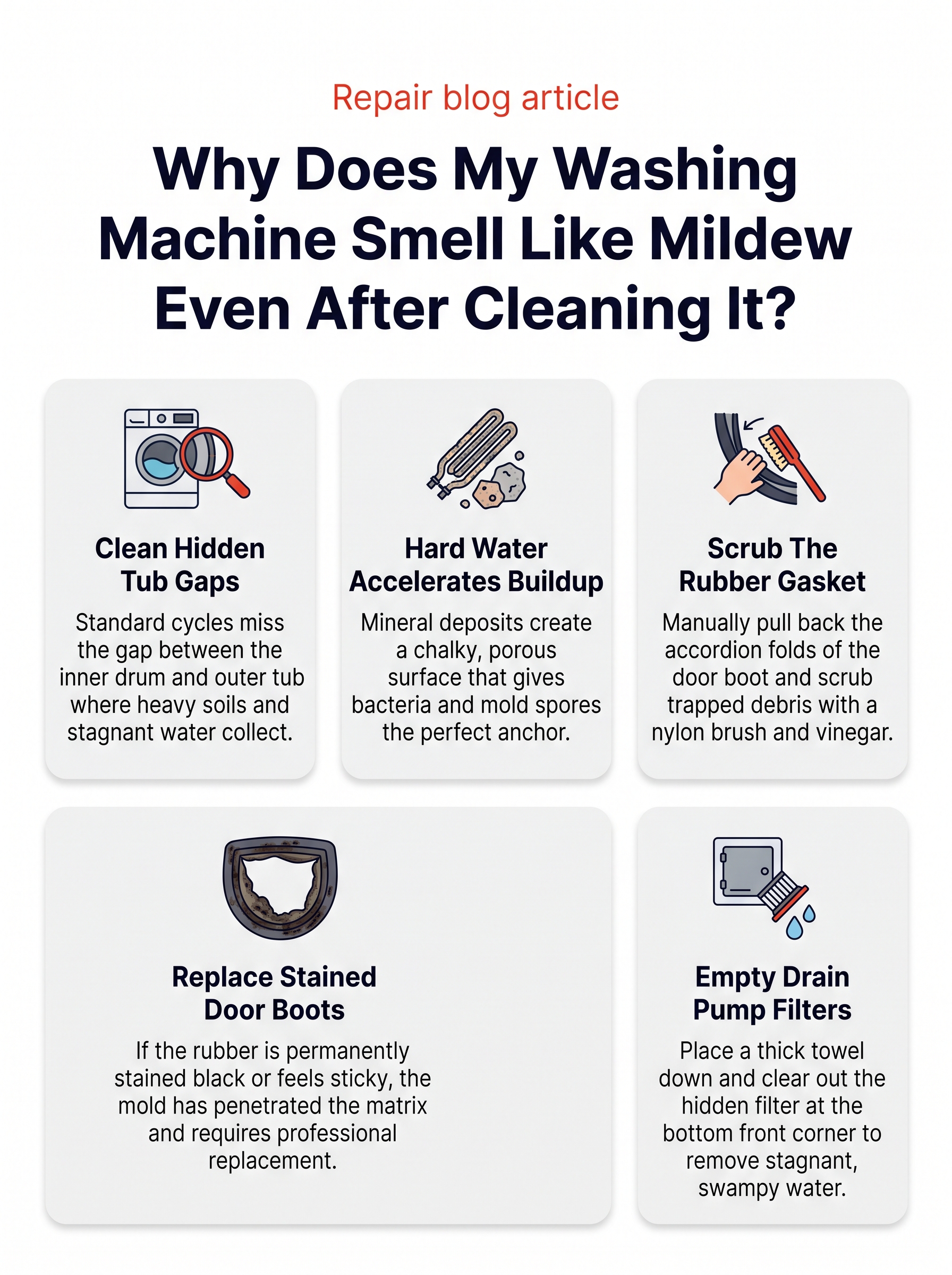
The real issue lies in the gap between the inner spinning drum and the outer stationary plastic tub. This outer tub holds the water during a wash cycle. Over time, heavy soils, lint, and stagnant water collect at the bottom of this plastic housing.
Did you know?
Hard water accelerates internal buildup. Mineral deposits from hard water create a porous, chalky surface on hidden internal parts, giving bacteria and mold spores the perfect texture to anchor themselves securely.
Once established on these porous surfaces, mold multiplies rapidly in the dark, damp environment. A standard cleaning tablet tossed into the main drum simply passes over this hardened organic matter without breaking it down.
Mastering washer door boot mildew removal
The thick rubber door gasket on front load machines acts as the primary breeding ground for persistent sour odors. This component, known as the door boot, creates a watertight seal. Its accordion-like folds are notorious for trapping lint, pet hair, loose coins, and constant moisture.
This creates a dark pocket of stagnant water that never fully dries. To eliminate the smell, you have to manually clean this area. Pull back the folds of the rubber gasket carefully. Use a soft nylon brush and a dedicated mildew cleaner or a strong white vinegar solution to scrub the trapped debris.
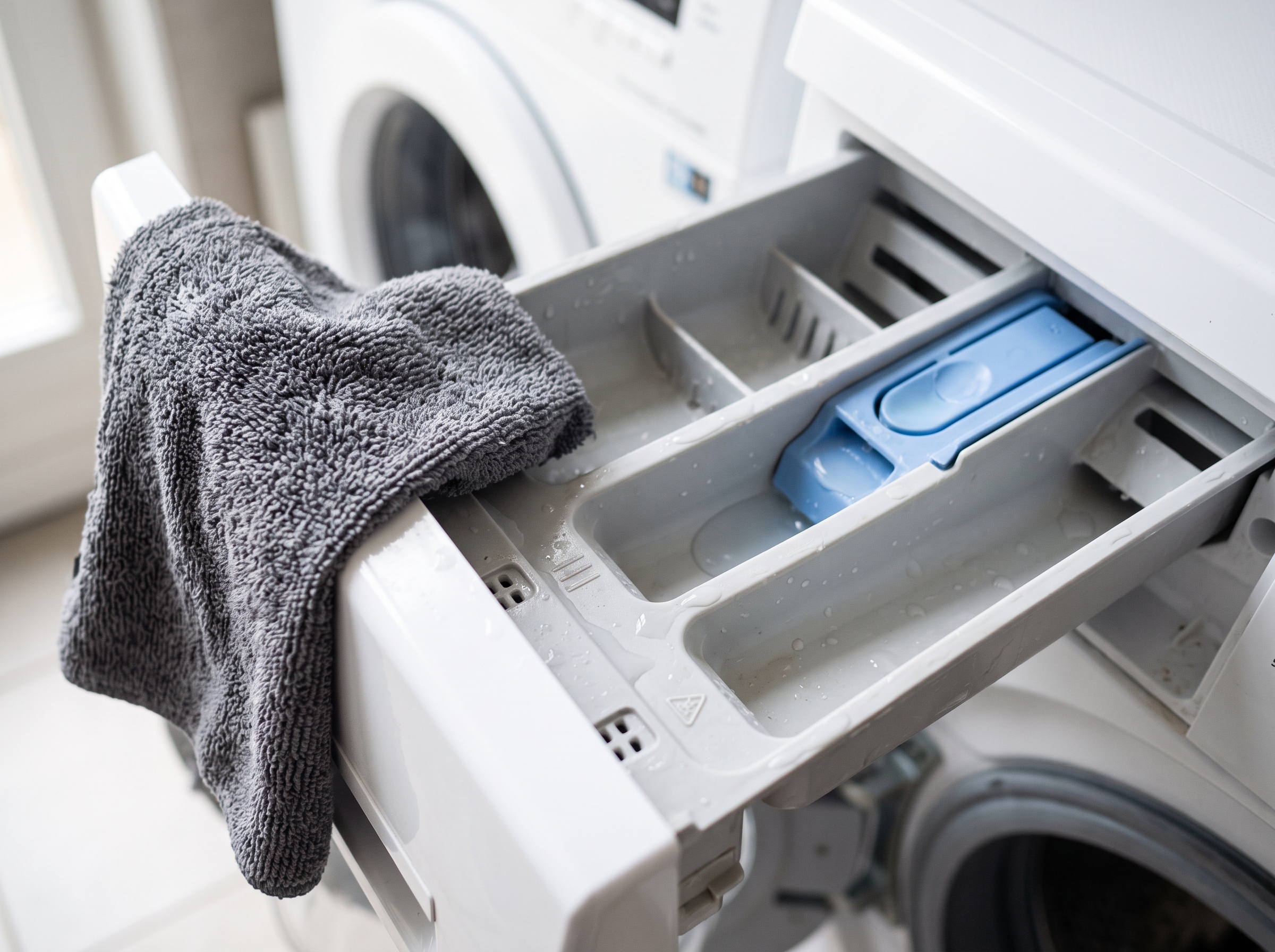
Wipe the entire seal down with a clean microfiber cloth afterward. If the rubber is permanently stained black, feels sticky, or is physically degrading, scrubbing will no longer work. The mold has penetrated the rubber matrix itself. At this stage, the boot requires professional replacement to restore a sanitary wash environment.
The importance of front load washer drain pump filter cleaning
Most homeowners do not realize their front load washer has a drain pump filter. You can typically find this component hidden behind a small access panel at the bottom front corner of the machine. This filter protects the drain pump by catching foreign objects like coins, keys, and heavy lint before they can damage the impeller blades.
While it excels at catching debris, it also acts as a reservoir for stagnant water. Neglecting this filter allows swampy water to sit in the housing for months. As the trapped organic matter decomposes, the resulting sour smell permeates the entire machine.
Pro tip
Place a thick towel down in front of the machine before opening the filter housing. Pull out the small residual drain hose if your model has one, and empty the trapped water into a shallow dish to prevent flooding your laundry room floor.
Once drained, unscrew the filter housing counterclockwise. Pull the filter out, remove any trapped debris, and give it a thorough rinse under warm water before securing it back in place.
How detergent residue buildup feeds mildew
A common misconception is that adding more soap results in cleaner clothes. In reality, modern ENERGY STAR certified washers use significantly less water than older models. They simply cannot rinse away heavy doses of liquid detergent and thick fabric softeners.
When excess liquid soap fails to rinse away, it leaves a slick, sticky film on the internal plumbing and the outer tub. This detergent scum contains animal fats, plant oils, and chemical thickeners. It acts as a direct, high-calorie food source for mold and mildew spores.
To starve the mildew, you have to cut off its food supply. Switch to a high-quality powdered detergent, which rinses away much cleaner than heavy liquids. If you prefer liquid, strictly measure high-efficiency detergent to a maximum of two tablespoons per normal load.
Daily habits to adopt when your washing machine smells like mildew after cleaning
Preventing odors requires a few minor adjustments to your laundry routine. The most impactful habit is leaving the washer door slightly ajar after every single load. This allows proper air circulation to enter the drum, evaporating residual moisture before mold has a chance to form.
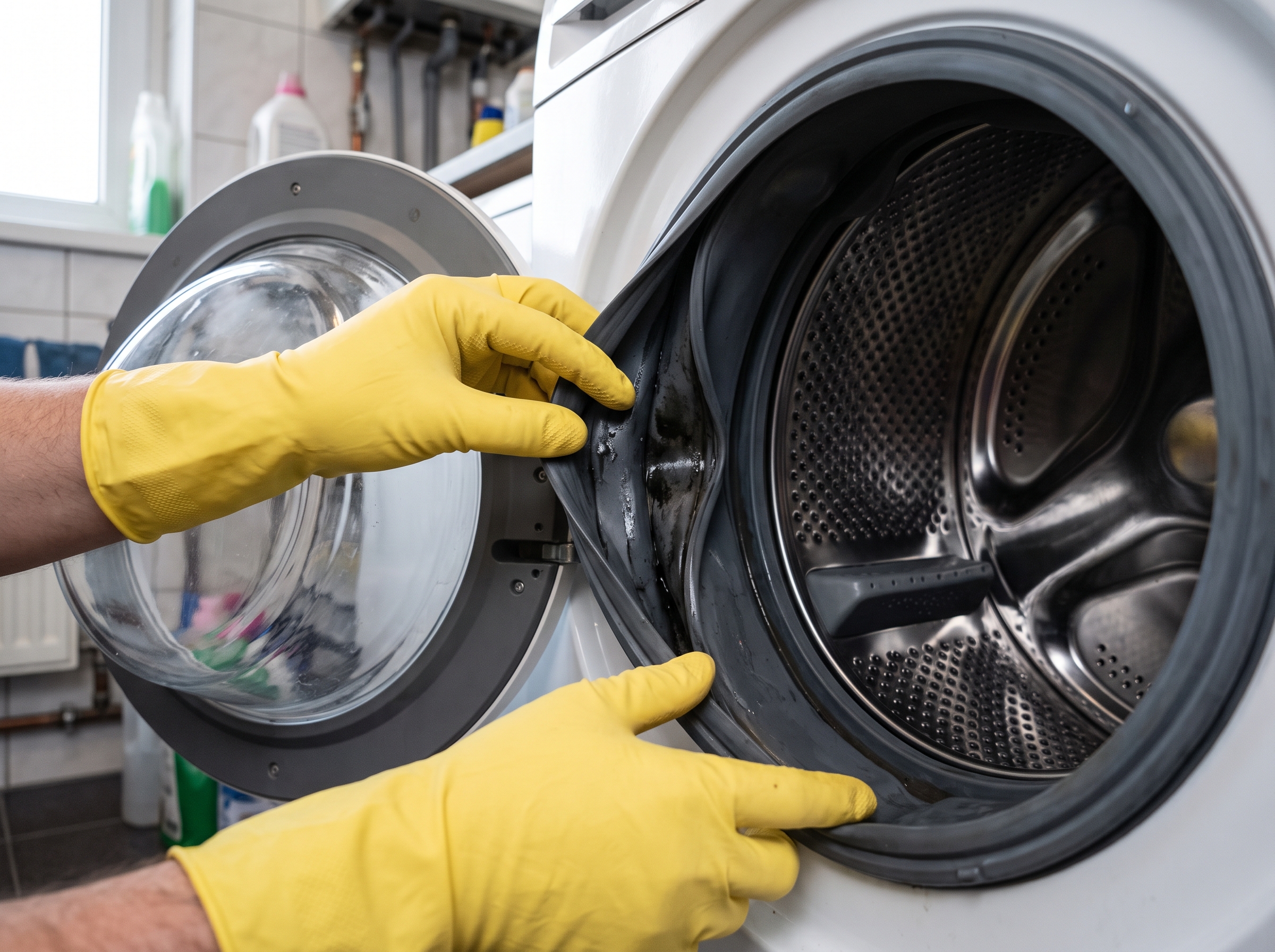
You should also pull the detergent dispenser drawer out slightly to dry. The siphon tubes located behind the dispenser drawer remain wet long after the cycle finishes, making them a frequent target for black mold growth.
Finally, remove wet laundry immediately after the spin cycle ends. Letting damp clothes sit in a sealed drum for hours creates a humid microclimate. This forces moisture deep into the rubber seals and internal venting systems, accelerating mildew growth.
When to call for professional laundry appliance repair
Sometimes a persistent odor points to a mechanical failure rather than simple buildup. If your machine smells like sewage or standing water, you might have a partially clogged drain line. A failing drain pump can also leave dirty water behind at the end of a cycle, guaranteeing a foul smell the next time you open the door.
A professional technician has the tools and expertise to properly dismantle the unit. They can physically scrub the outer tub, clear deep plumbing blockages, and test the drain pump for proper voltage and flow rate.
If you suspect a mechanical failure is causing the smell, Get a free estimate to have a technician diagnose the root cause. Scheduling professional Appliance repair solutions is often a highly cost-effective alternative to replacing a machine that simply needs a deep internal teardown or a new drain pump.
Frequently asked questions about washing machine odors
Why does my washer smell worse after using vinegar?
Vinegar is a mild acid that breaks loose hard chunks of hidden calcium buildup and soap scum. When these chunks break free, they expose trapped pockets of bacteria and mold. You often need to run two or three additional empty hot water cycles to completely flush these newly exposed odors out of the drain system.
Can mildew in the washer transfer to my clothes?
Yes, invisible mildew spores easily transfer from the drum to your fabrics during the wash cycle. While your clothes might smell fine coming out of the dryer, those spores reactivate when exposed to moisture. This is why clean towels or gym clothes suddenly smell sour the moment they get damp from sweat or rain.
How often should I deep clean my washing machine?
You should perform a manual clean of the rubber door boot and the drain pump filter every month. Additionally, run a hot descaling cycle with a specialized washing machine cleaner every thirty washes to prevent mineral and soap buildup inside the outer tub.
Related Resources:
- Complete Guide to Laundry Appliance Maintenance
- Common Washing Machine Faults and Solutions
- Understanding Your Washing Machine Error Codes
ASAP Appliance Repair provides expert diagnostics and maintenance for homeowners throughout the region. Whether you live in Toronto, Mississauga, or Richmond Hill, our technicians are ready to restore your appliances to peak condition. Contact us today to schedule your service.
Free Checklist: Washer Mildew Elimination Guide
 Fridge Repair
 Dishwasher
 Washer Repair
 Dryer
 Oven Repair
 Stove Repair