

Understanding Miele Washing Machine Waterproof System Faults in 2026
Seeing a miele waterproof system fault on your washing machine display means the internal leak sensor has detected water where it does not belong. The machine automatically shuts down to prevent a flood. Before you panic about water damage, understand exactly what triggered this safety feature and the exact steps to diagnose the root cause. When in doubt, booking reliable Washer repair services ensures the underlying leak is fixed correctly without risking further damage to your laundry room.
What the Miele waterproof system actually does
Miele engineers designed the Waterproof System (WPS) as a highly sensitive safety mechanism. The setup relies on three main components to keep your home dry. First, a double-solenoid valve controls the water intake directly at the tap. Second, a double-walled inlet hose carries water into the machine. If the inner hose ruptures, the outer sleeve catches the water and directs it down into the machine base.
The third component is the base pan float switch. This sits at the very bottom of the washing machine cabinet. When water pools in this pan, a styrofoam float rises and triggers a microswitch. The moment this happens, the machine immediately shuts off the water supply valves and activates the drain pump to clear the drum. The fault code on your screen is a protective measure to save your floors, rather than a terminal machine failure.
Common triggers for a miele waterproof system fault
Not every leak requires major component replacement. Often, user habits or minor blockages cause water to end up in the base pan. Detergent overdosing is a frequent culprit. Using too much soap creates excess suds that expand, bypass the drum seals, and drip directly into the base pan. Once the suds turn back into liquid, the float switch activates.
Physical damage to the door boot seal also causes internal dripping. Zippers, keys, or sharp objects left in pockets can tear the rubber gasket during a high-speed spin cycle. Water then seeps through the tear and collects at the bottom of the chassis.
Loose internal hose connections or a blocked drain pump filter force water to back up. Having a washing machine leak sensor triggered is frequently the result of these minor blockages or oversights rather than a catastrophic mechanical failure.
Immediate steps to take when the error appears
When the machine locks up and displays the fault, your first priority is securing the water supply. Turn off the water valve at the wall immediately to stop any pressurized flow to the appliance.
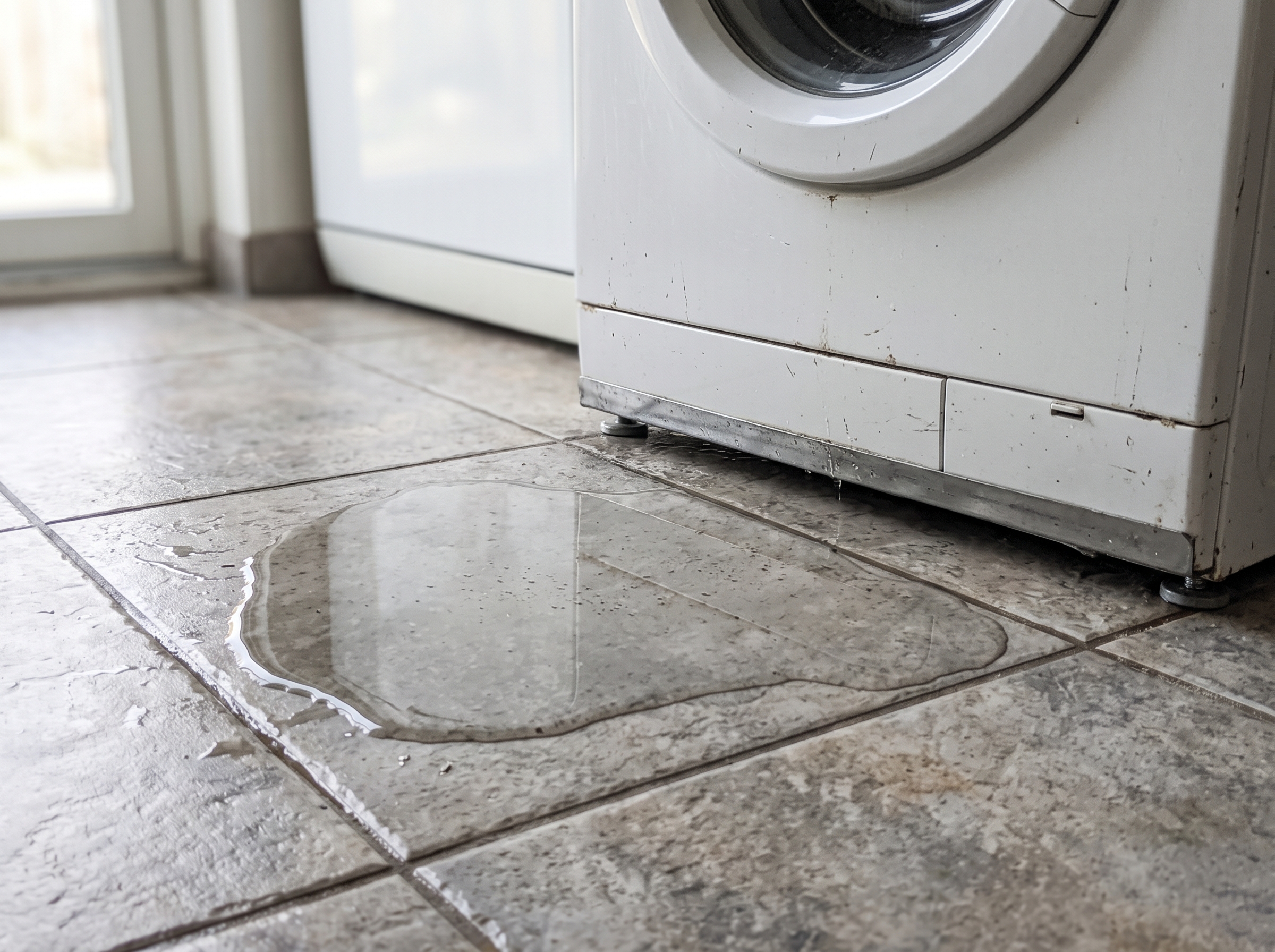
Next, disconnect the washing machine from its power source. Unplugging the unit ensures your safety while you inspect the area for standing water. Never wade into a puddle around an appliance that is still plugged into a live electrical outlet.
You will likely have wet laundry trapped inside a locked drum. Locate the manual drain tube near the front filter access panel at the bottom corner of the machine. Place a shallow tray under the tube, pull the plug, and let the water drain completely. Once the drum is empty, you can safely use the manual door release tab to retrieve your clothes.
How to approach Miele washer fault codes safely
Unlike a simple software glitch, Miele washer fault codes tied to the waterproof system will not clear simply by unplugging the machine for five minutes. The float switch remains physically elevated as long as water sits in the base pan.
A common temporary diagnostic step involves pulling the machine away from the wall and tilting it slightly backward. This allows the trapped water in the base pan to spill out onto a towel, lowering the float switch and resetting the sensor. You can then plug the machine back in to see if the error clears.
Be extremely careful when moving heavy appliances. If you are unsure about the source of the water, attempting to run another cycle could cause further electrical damage to the motor or control board.
When to call for professional appliance repair
Differentiating between a one-off suds overflow and a persistent mechanical leak dictates your next move. If you used the wrong detergent and cleared the base pan, the machine might run perfectly fine. However, if the error returns, you need professional intervention.
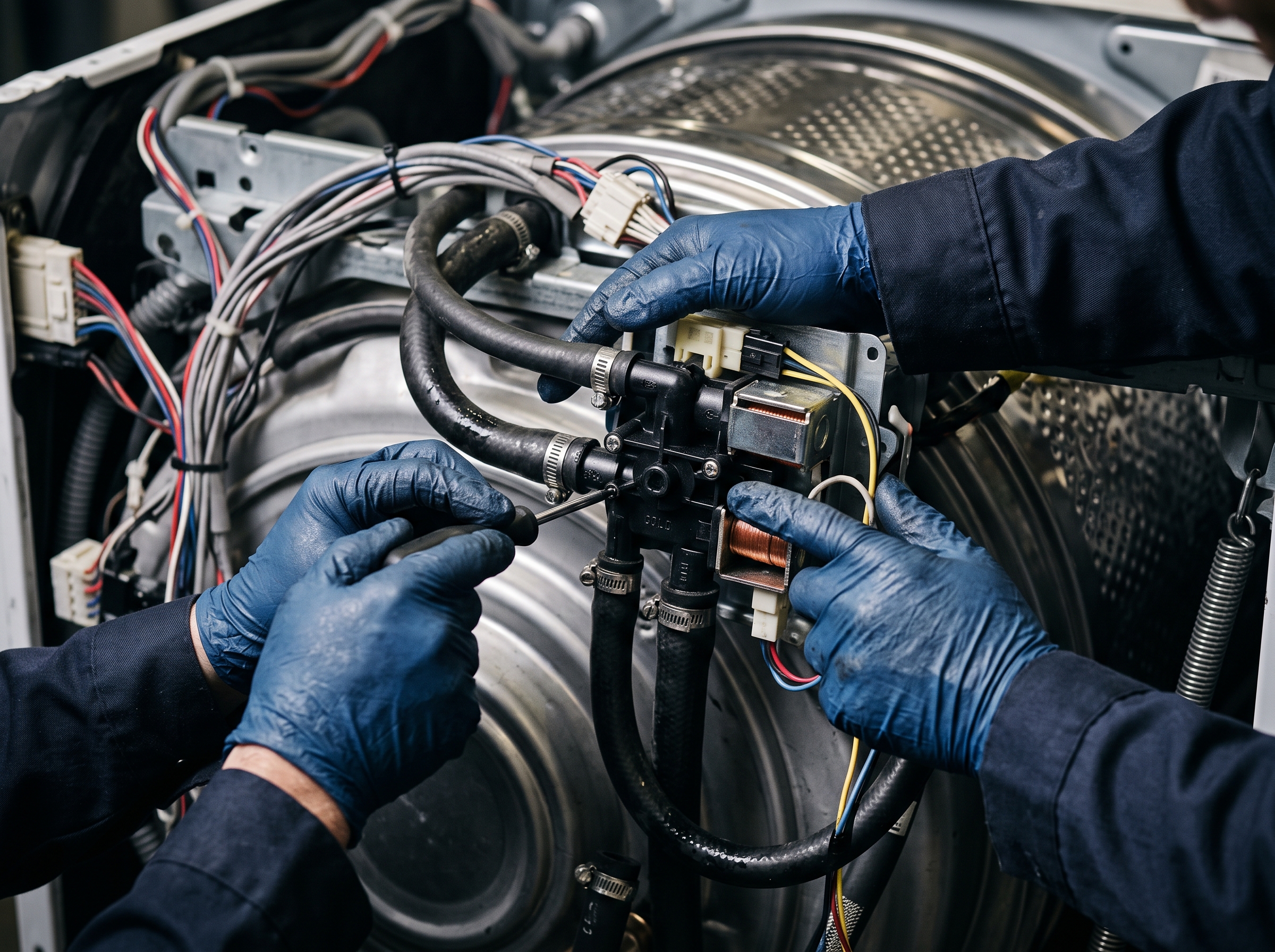
Repeatedly clearing the code without fixing the underlying leak leads to rusted internal components, mold growth inside the cabinet, or catastrophic motor damage. Replacing a cracked double-walled inlet hose, a failing internal circulation pump, or a torn door boot requires specialized expertise and the correct diagnostic tools.
Rather than guessing which internal hose has a pinhole leak, you can Get a free estimate from a certified technician. Booking Professional appliance repair services ensures the entire waterproof system is tested and restored to factory specifications.
Preventing future leak sensor errors
Maintaining a watertight machine requires a few simple monthly habits. Establish a routine of cleaning the drain pump filter and coin trap once a month. A clean filter prevents water from backing up and overflowing into the base.
Always use high-efficiency detergent in the exact quantities specified by the manufacturer. Modern machines use very little water, meaning they need very little soap. The ENERGY STAR guidelines for high-efficiency washers emphasize that using standard detergent in these units causes excessive sudsing and poor rinsing performance.
Finally, wipe down the rubber door seal after your wash days. Removing hair, lint, and debris prevents materials from breaking the watertight barrier between the glass door and the rubber gasket.
Frequently asked questions
Can I bypass the Miele waterproof system?
No. Bypassing a safety sensor creates a severe flood risk for your home and immediately voids any remaining manufacturer warranties. The system exists specifically to protect your property from thousands of dollars in water damage.
How much does it cost to fix a leak sensor?
The sensor itself rarely fails. Repair costs depend entirely on the source of the actual leak. A simple torn door boot will cost significantly less to repair than a cracked outer tub or a failed circulation pump.
Will a power reset clear the waterproof fault?
A power reset only works if the water in the base pan has completely evaporated or been manually drained. If the styrofoam float remains elevated by standing water, the machine will continue to display the fault code the moment it receives power.
Free Reference: Miele Waterproof System Fault Guide
 Fridge Repair
 Dishwasher
 Washer Repair
 Dryer
 Oven Repair
 Stove Repair